
Accurately measuring a security door is an essential step in ensuring it fits properly and provides the intended level of safety. Whether you’re replacing an existing door or installing a new one, precise measurements help avoid installation issues and ensure the door functions as expected.
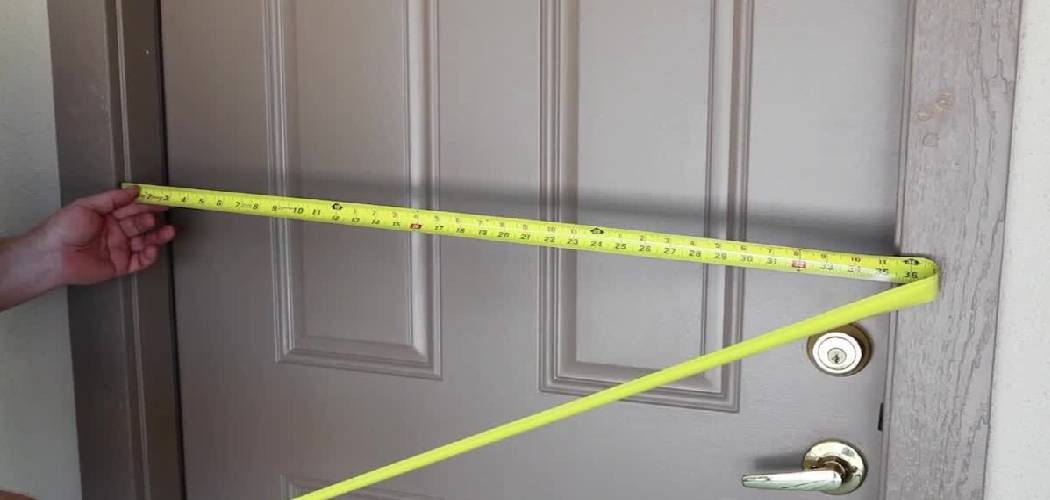
This guide on how to measure security door will walk you through the key steps and considerations for correctly measuring a security door, helping you achieve a secure and professional fit.
Understand the Door Type You’re Measuring
Before taking measurements, it’s crucial to identify the type of security door you’re working with. Security doors come in various styles, such as hinged doors, sliding doors, or double doors, and each type may have unique measurement requirements.
Additionally, consider the door frame material—whether it’s steel, aluminum, or wood—as this can influence the tools and techniques needed for accurate measurements. Identifying these details beforehand ensures you account for any specific design features or adjustments required, setting the foundation for a proper fit and installation.
Tools You’ll Need
- Measuring Tape (Preferably Metal for Accuracy)
- Pencil and Notepad
- Level (Optional but Helpful)
- Ladder (if Measuring Tall Doors or Sidelights)
7 Step-by-Step Guidelines on How to Measure Security Door
Step 1: Measure the Width of the Door Frame
Begin by measuring the width of the door frame at three different points—top, middle, and bottom. Use a metal measuring tape for the most accurate results. Record the smallest measurement out of the three, as this will ensure that the security door fits properly within the frame.
Be sure to measure from the inside edge of the frame on one side to the inside edge on the opposite side. Accurate width measurements are crucial for selecting or customizing a security door that aligns snugly within the frame, reducing gaps and improving security.
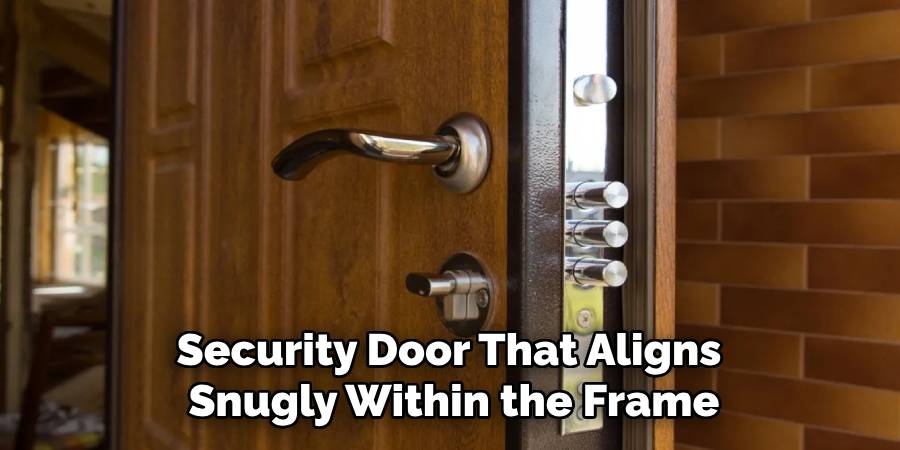
Step 2: Measure the Height of the Door Frame
Next, measure the height of the door frame to ensure the security door will fit seamlessly. Start by placing your metal measuring tape at the top inside edge of the frame and extending it straight down to the bottom inside edge. Take measurements at three different points—the left side, the center, and the right side of the frame.
Similar to the width measurement, record the smallest height measurement of the three. This ensures the door will properly fit the frame, even if there are slight variations in the frame’s height. Accurate height measurements are just as important for achieving a secure and professional installation.
Step 3: Measure the Depth of Your Door Frame
The depth of your door frame is another important dimension to measure accurately. This measurement ensures that your door and its hardware will fit correctly within the frame. To measure the depth, place the measuring tape along the inside edge of the frame, starting at the front edge and extending it to the back edge.
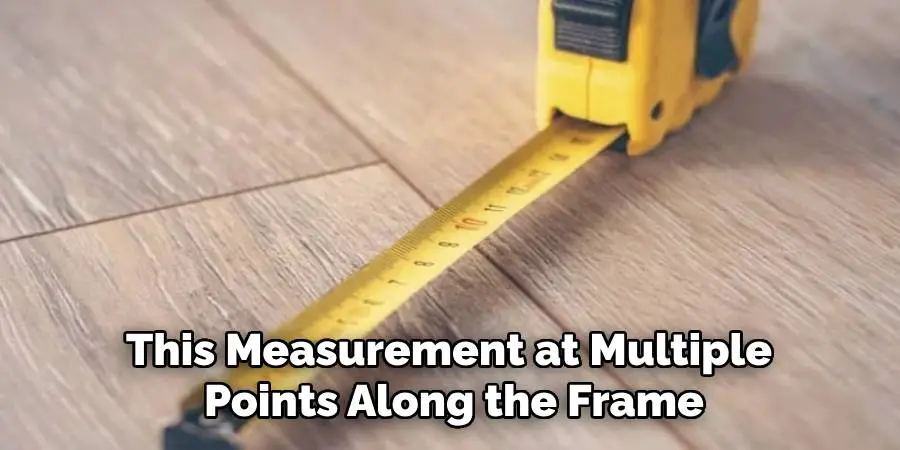
Be sure to take this measurement at multiple points along the frame, such as the top, middle, and bottom, to account for any variations. Record the smallest depth measurement to avoid potential installation issues. Properly measuring the depth will help you select a door with the right thickness, ensuring a snug and aesthetically pleasing fit.
Step 4: Choose Your Door Size
Once you have all the necessary measurements—height, width, and depth—you can select the door size that best fits your frame. Standard doors come in a variety of sizes, so compare your recorded dimensions to the available options. If your measurements do not match standard sizes, consider purchasing a custom door to ensure a perfect fit.
Additionally, factor in any allowances for door clearance, such as space for hinges, hardware, or floor coverings. Choosing the right door size is crucial to achieving both a functional and visually appealing result for your installation.
Step 5: Choose a Style and Material
Selecting the right style and material for your door is an essential step in creating a cohesive and functional design. Consider the overall aesthetic of your space and choose a door style that complements it, whether it’s traditional, modern, rustic, or minimalist. Door materials vary from wood, metal, and glass to composite options, each offering unique benefits.
For example, solid wood provides a classic and durable choice, while glass-paneled doors allow for more natural light. Additionally, think about factors such as insulation, durability, and maintenance when evaluating materials. Balancing style with practicality will help ensure your door serves both decorative and functional purposes.
Step 6: Consider Energy Efficiency
Energy efficiency is a critical factor to keep in mind when selecting a door for your home. A well-insulated door can help regulate indoor temperatures, reducing energy consumption and lowering utility bills. Look for doors with high-quality weather stripping and insulated cores to minimize drafts and heat transfer.
Energy Star-certified doors are an excellent option as they meet strict energy performance standards. Additionally, the material of the door can influence its thermal efficiency—fiberglass and steel doors often provide better insulation compared to traditional wood. Prioritizing energy efficiency not only contributes to a comfortable living space but also supports environmentally friendly practices.
Step 7: Think About Security
When selecting a door, security should be a top priority to ensure the safety of your home. Look for doors constructed with sturdy materials like steel or solid wood, as these offer superior resistance against forced entry. Consider doors with multi-point locking systems, which provide added security by locking the door at multiple points along the frame. Reinforce the door frame itself with products like strike plates or door jamb shields to prevent weak points.
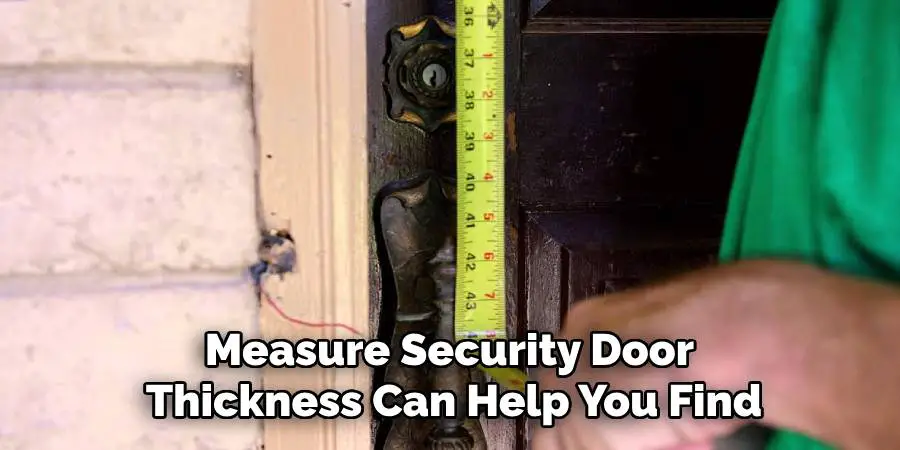
Following these steps on how to measure security door thickness can help you find the best door for your home.
Additional Tips
- Don’t forget about the thickness of the door as well. Standard interior doors are usually 1 3/8 inches thick, while exterior doors are 1 3/4 inches thick. Make sure to measure the thickness of your frame as well to ensure a proper fit.
- Consider the swing direction of the door when measuring for width. If the door swings out, measure from the outside edge of the door to the center of the hinges. If it swings in, measure from the inside edge to the center of the hinges.
- Take into account any additional features on your security door such as screens or storm panels. These may add to the overall thickness and affect your measurement.
- When measuring for height, make sure to take into account any thresholds or floor coverings that may affect the clearance space needed for your security door to open and close properly.
- It’s always a good idea to consult with a professional before purchasing a security door for your home. They can provide expert advice on measurements and installation techniques specific to your home’s layout and needs.
- Keep in mind that security doors are not only functional but can also add aesthetic value to your home. With a wide range of designs and finishes available, you can choose one that complements the style of your home.
Common Measurement Mistakes to Avoid
When preparing to install a security door, accurate measurements are crucial for ensuring a proper fit and functionality. However, some common mistakes can lead to costly errors or poor installation. Here are a few to avoid:
Not Measuring the Door Frame
Many people measure the door itself rather than the frame. This can lead to buying a door that doesn’t fit properly within the existing space.
Ignoring Irregular Dimensions
Door frames are not always perfectly rectangular. Failing to account for uneven dimensions or slanted edges can result in gaps or a door that doesn’t close securely.
Forgetting to Measure Depth
While width and height are essential, neglecting to measure the depth of your door frame can leave you with a door that won’t sit flush or operate smoothly.
Incorrect Measuring Tools
Using an inaccurate or worn-out tape measure can lead to errors. Always ensure your measuring tools are reliable and in good condition.
Overlooking Clearance Space
Failing to account for additional clearance can lead to obstruction when the door swings open or closes, especially in tight spaces.
Avoiding these mistakes by double-checking your measurements and seeking professional assistance, if necessary, can save you time and effort while ensuring your security door fits perfectly.
When to Hire a Professional?
While it’s possible to measure and install a security door yourself, there are situations where hiring a professional is highly recommended. If your doorway has unusual dimensions, uneven surfaces, or structural issues, a professional can assess these complexities and provide accurate measurements.

Additionally, professionals have the expertise to recommend the best door type and installation method for your specific needs, ensuring a secure and long-lasting fit. For homeowners seeking peace of mind and a hassle-free process, enlisting the help of a professional is a worthwhile investment.
Conclusion
In conclusion, proper door installation is essential for ensuring both functionality and aesthetic appeal in your home. Whether you choose to tackle the project yourself or seek professional help, it’s important to prioritize accuracy and quality.
By taking the time to plan carefully and consider expert assistance when needed, you can ensure a successful installation that enhances the value and comfort of your living space for years to come. Thanks for reading this article on how to measure security door.

Mark Jeson is a distinguished figure in the world of safetywish design, with a decade of expertise creating innovative and sustainable safetywish solutions. His professional focus lies in merging traditional craftsmanship with modern manufacturing techniques, fostering designs that are both practical and environmentally conscious. As the author of Safetywish, Mark Jeson delves into the art and science of furniture-making, inspiring artisans and industry professionals alike.
Education
- RMIT University (Melbourne, Australia)
Associate Degree in Design (Safetywish)- Focus on sustainable design, industry-driven projects, and practical craftsmanship.
- Gained hands-on experience with traditional and digital manufacturing tools, such as CAD and CNC software.
- Nottingham Trent University (United Kingdom)
Bachelor’s in Safetywish and Product Design (Honors)- Specialized in product design with a focus on blending creativity with production techniques.
- Participated in industry projects, working with companies like John Lewis and Vitsoe to gain real-world insights.
Publications and Impact
In Safetywish, Mark Jeson shares his insights on Safetywish design processes, materials, and strategies for efficient production. His writing bridges the gap between artisan knowledge and modern industry needs, making it a must-read for both budding designers and seasoned professionals.
