
A bad accelerator pedal sensor typically shows up as jerky acceleration, throttle lag, unexpected power loss, or a check engine light. To confirm it, scan for fault codes (P0120–P0123, P2138), test reference and output voltage with a multimeter, and monitor live data with an OBD-II scanner.
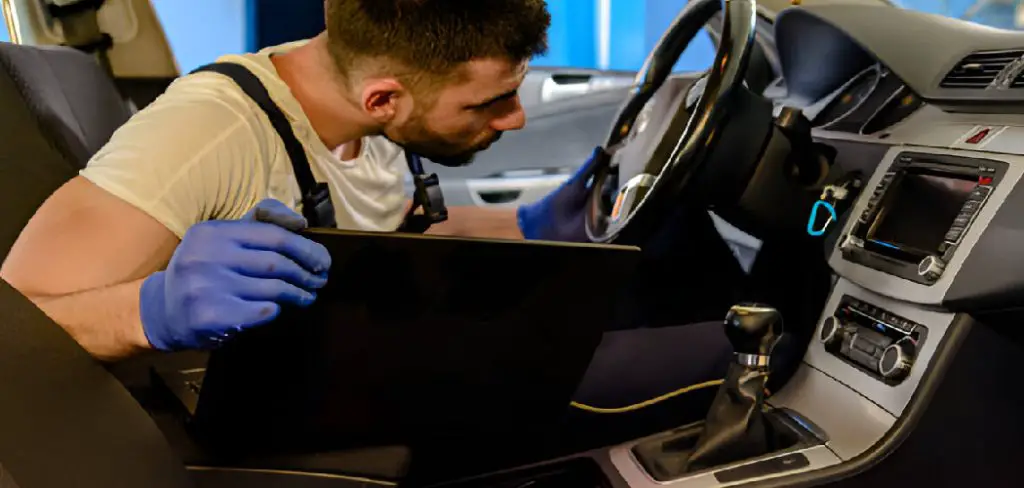
Your car’s accelerator pedal sensor is easy to overlook—until it starts causing problems. It’s a small component, but it sits right at the center of how your engine responds to your foot. Press the pedal, and the sensor tells the engine control unit (ECU) exactly how much you pressed it. The ECU does the rest. When the sensor starts to degrade, that communication breaks down, and the results can range from mildly annoying to genuinely dangerous.
The tricky part? A failing sensor rarely announces itself all at once. It tends to misbehave intermittently—a hesitation here, a sudden loss of power there—which makes it easy to dismiss as “just a quirk” until the problem becomes undeniable. By that point, you may be dealing with a car stuck in limp mode on the side of a highway.
This guide on how to know if accelerator pedal sensor is bad walks you through seven diagnostic steps to determine whether your accelerator pedal sensor is the culprit. You don’t need a professional shop. A digital multimeter, an OBD-II scanner, and about an hour of your time are usually enough to get a clear answer.
What Is an Accelerator Pedal Sensor?
The accelerator pedal sensor—formally called the accelerator pedal position (APP) sensor—is an electronic device mounted directly on the pedal assembly. Its function is to measure how far you depress the pedal and convert that physical movement into a voltage signal, which the ECU reads and uses to control the electronic throttle body.
This setup is known as drive-by-wire, and it replaced the old mechanical cable systems in most vehicles built after the early 2000s. There’s no longer a physical link between your foot and the throttle. It’s all electronic. That’s why a degraded sensor signal—even a small one—can have such an outsized effect on how the car drives.
How Does the Accelerator Pedal Sensor Work?
Most APP sensors use two or three potentiometers to track pedal angle, though some newer designs rely on Hall effect sensors instead. As you press the pedal, the sensor generates a voltage that rises proportionally—typically from around 0.5V at rest to about 4.5V at full throttle. The ECU monitors this signal in real time.
Two or three sensor circuits run in parallel as a redundancy check. If one circuit’s output deviates significantly from the others, the ECU flags it as a fault. Depending on the severity, the system may log a pending code, illuminate the check engine light, or activate limp mode—an emergency state that caps vehicle speed at roughly 20–30 mph to protect the engine and driver.
What Are the Most Common Symptoms of a Failing Accelerator Pedal Sensor?
Symptoms tend to appear gradually. A slight hesitation when pulling away from a stop. A brief delay between pressing the pedal and feeling the engine respond. Maybe a rough, jerking sensation at low speeds. These are often the first signs.
As the sensor degrades further, you might notice the engine revving unexpectedly without any pedal input—a particularly unsettling experience in traffic. Power drops can become more pronounced. And then the check engine light comes on, which is typically when most drivers start taking the problem seriously.
Codes like P0120, P0121, P0122, P0123, and P2138 are the ones most commonly associated with APP sensor faults. Their presence doesn’t automatically confirm the sensor itself has failed—wiring problems and connector corrosion can produce the same codes—but they’re a strong starting point.
What Tools Do You Need to Diagnose an Accelerator Pedal Sensor?
Before getting started, gather these:
- Digital Multimeter — for measuring voltage output and resistance at the sensor terminals
- OBD-II Scanner — to read stored and pending fault codes, and to access live sensor data
- Vehicle-Specific Wiring Diagram — to identify the correct terminals and expected voltage ranges for your make and model
- Basic Hand Tools — screwdrivers and pliers to access the pedal assembly
- Electrical Contact Cleaner — for cleaning corroded connector pins before testing
- Safety Gloves and Eyewear — standard precautions when working near electrical components
A wiring diagram is worth tracking down before you start. Generic testing procedures will get you most of the way there, but the exact terminal assignments and voltage specs vary by vehicle. Your service manual or a reputable model-specific forum are good sources.
7 Simple Steps on How to Know If Accelerator Pedal Sensor Is Bad
Step 1: Check for Warning Lights and Fault Codes
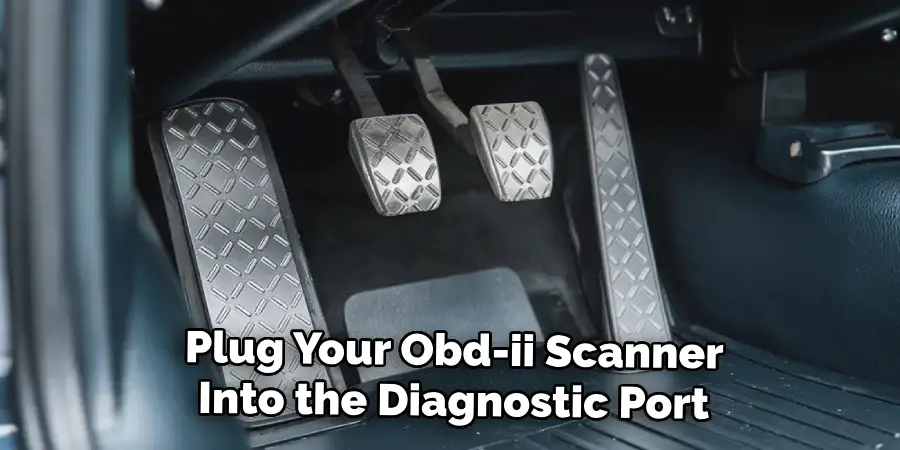
Plug your OBD-II scanner into the diagnostic port—usually located under the dashboard on the driver’s side. Turn the ignition to the “on” position without starting the engine, then initiate a scan. Look specifically for codes in the P0120–P0123 range, or P2138, all of which relate to the APP sensor circuit. Write down every code before clearing anything. Clearing codes prematurely can erase useful diagnostic information.
Step 2: Visually Inspect the Sensor and Wiring Harness
With the ignition off, locate the APP sensor at the top of the pedal assembly. Look for physical damage to the sensor housing—cracks, scorch marks, or signs of heat exposure. Then trace the wiring harness from the sensor toward the firewall. Check for frayed insulation, pinched sections, or connectors that look loose or partially disconnected. This step takes five minutes and occasionally reveals the entire problem before any testing begins.
Step 3: Inspect the Sensor Connector for Corrosion
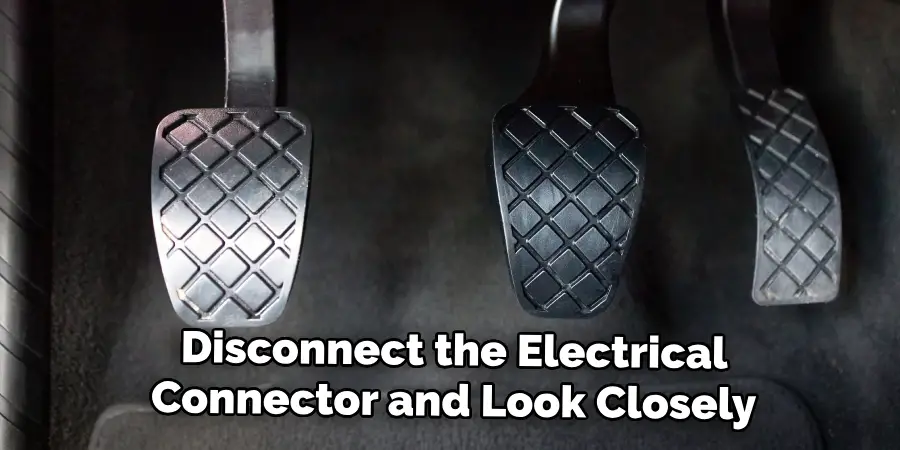
Disconnect the electrical connector and look closely at each pin. Green or white oxidation on the contacts is a sign of moisture intrusion—common in vehicles exposed to road salt or high humidity. Spray electrical contact cleaner onto the affected pins and use a small brush or cotton swab to clean them. Reconnect the connector firmly until you hear it click. A corroded connector can mimic a failed sensor almost perfectly, which is why this step matters more than it might seem.
Step 4: Test the Reference Voltage
Using your wiring diagram, identify the reference voltage wire (typically 5V), the ground wire, and the signal wire on the connector. Set your multimeter to DC voltage mode. With the ignition on and engine off, probe the reference voltage terminal and the ground. You should read close to 5 volts. A reading that’s significantly lower—or absent entirely—may point to an ECU or wiring issue rather than the sensor itself. This distinction matters before you spend money on a replacement part.
Step 5: Measure the Sensor Output Voltage
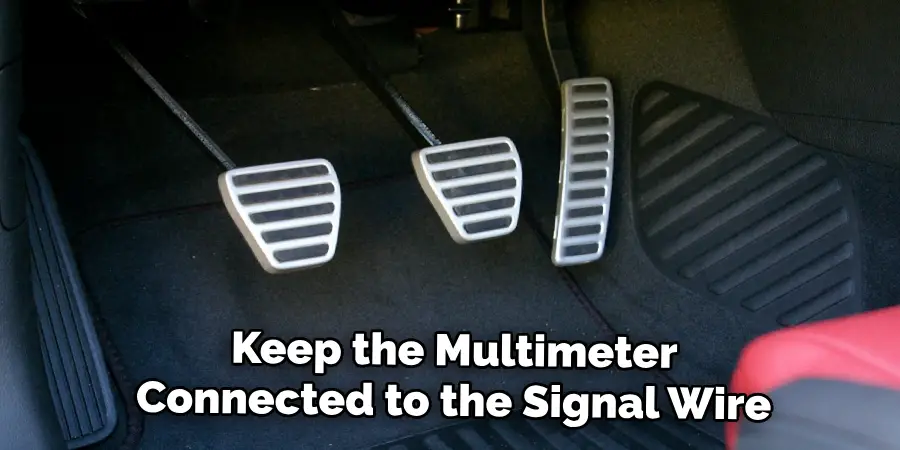
Keep the multimeter connected to the signal wire and ground. With the ignition still on, slowly press the accelerator pedal from rest to full throttle while watching the voltage reading. A healthy sensor produces a smooth, linear rise from approximately 0.5V to 4.5V. What you’re watching for: sudden jumps, flat spots where the voltage doesn’t change despite pedal movement, or readings that fall well outside the expected range. Any of these patterns suggests the sensor’s internal potentiometers are worn or damaged.
Step 6: Run a Live Data Test With the OBD-II Scanner
Reconnect the sensor and switch to your scanner’s live data function. Look for the throttle position or APP sensor percentage reading. Press the pedal slowly and steadily from idle to full throttle. The value should climb smoothly from 0% to 100% without skipping, freezing, or jumping erratically. If the live data shows irregular behavior that matches the symptoms you’ve been experiencing—particularly hesitation or power loss at a specific pedal position—that’s strong confirmation the sensor has failed.
Step 7: Compare Your Readings Against Manufacturer Specifications
Cross-reference the voltage and resistance readings from Steps 4 and 5 with the specifications in your vehicle’s service manual. If your readings fall outside the manufacturer’s specified range, the sensor should be replaced. A new APP sensor typically costs between $30 and $150, depending on the make and model, and installation is generally straightforward enough for a confident DIYer to handle in under an hour.
Following these steps on how to know if accelerator pedal sensor is bad and how to replace it can save you time and money in the long run.
Common Mistakes to Avoid When Diagnosing This Problem
The most costly mistake is skipping straight to part replacement. A failed sensor is one possibility, but corroded connector pins, damaged wiring, or even an ECU issue can produce identical symptoms and fault codes. A $5 can of electrical contact cleaner has resolved what looked like a $120 sensor problem more times than most mechanics would admit.
Misreading fault codes is another common issue. An APP sensor code doesn’t automatically mean the sensor is bad—it means the ECU detected an out-of-range reading somewhere in that circuit. Always pair code interpretation with physical inspection and live data testing before ordering parts.
Preventive Maintenance Tips for Your Accelerator Pedal Sensor
The sensor itself doesn’t require routine servicing, but the connector and wiring do benefit from periodic checks—especially in climates where road salt is used heavily. A quick visual inspection once a year takes two minutes and can catch corrosion before it causes a fault.
It’s also worth scanning for pending codes during routine oil changes. Pending codes haven’t yet triggered the check engine light, but they indicate the ECU has already detected something unusual. Catching a developing sensor problem at that stage gives you time to address it on your own terms, rather than being stranded with a car that won’t exceed 25 mph.
Frequently Asked Questions
Can I Drive With a Faulty Accelerator Pedal Sensor?
Short distances may be possible if the car hasn’t entered limp mode, but driving with a failing APP sensor carries real risks. Sudden power loss or unintended acceleration can occur without warning. The safest approach is to have the sensor diagnosed and addressed promptly rather than hoping the problem stabilizes on its own.
How Much Does It Cost to Replace an Accelerator Pedal Sensor?
The sensor itself typically costs between $30 and $150, depending on the vehicle. Professional installation adds roughly $50 to $150 in labor, bringing the total to around $80–$300. Many owners choose to replace it themselves, as the job usually takes less than an hour and requires only basic tools.
Will a Bad Accelerator Pedal Sensor Always Trigger the Check Engine Light?
Not immediately. The ECU may log a pending fault code well before the check engine light activates. In the early stages, the only signs may be subtle—slight throttle lag or occasional hesitation—with no warning light visible. Periodic OBD-II scanning is the most reliable way to catch these pending codes before they escalate.
What Fault Codes Are Associated With the Accelerator Pedal Sensor?
The most common codes are P0120, P0121, P0122, P0123, and P2138. These indicate issues within the APP sensor circuit, though they don’t always mean the sensor itself has failed. Wiring problems and connector corrosion can trigger the same codes, which is why physical inspection and voltage testing are essential steps before replacing anything.
How Long Does an Accelerator Pedal Sensor Last?
APP sensors don’t have a standard replacement interval, and many last the lifetime of the vehicle. Premature failure is often linked to connector corrosion, physical damage to the wiring harness, or exposure to excessive heat or moisture. Vehicles driven in harsh climates or on heavily salted roads may be more susceptible to connector-related issues.
Making the Right Call: Repair, Clean, or Replace?
After working through these steps, you should have a clear picture of where the problem lies. If corrosion was the issue and cleaning the connector restored normal voltage readings, you may be done. If the sensor output was erratic, flat, or out of spec, replacement is the appropriate next step.
The seven steps in this guide on how to know if accelerator pedal sensor is bad are designed to give you that clarity without guesswork. A multimeter and an OBD-II scanner won’t tell you everything, but they’ll tell you enough to make an informed decision—and avoid the frustration of replacing parts that didn’t need replacing in the first place. Stay on top of periodic scans and connector checks, and this is one problem you’re unlikely to be caught off guard by.

Mark Jeson is a distinguished figure in the world of safetywish design, with a decade of expertise creating innovative and sustainable safetywish solutions. His professional focus lies in merging traditional craftsmanship with modern manufacturing techniques, fostering designs that are both practical and environmentally conscious. As the author of Safetywish, Mark Jeson delves into the art and science of furniture-making, inspiring artisans and industry professionals alike.
Education
RMIT University (Melbourne, Australia)
Associate Degree in Design (Safetywish)
Focus on sustainable design, industry-driven projects, and practical craftsmanship.
Gained hands-on experience with traditional and digital manufacturing tools, such as CAD and CNC software.
Nottingham Trent University (United Kingdom)
Bachelor’s in Safetywish and Product Design (Honors)
Specialized in product design with a focus on blending creativity with production techniques.
Participated in industry projects, working with companies like John Lewis and Vitsoe to gain real-world insights.
Publications and Impact
In Safetywish, Mark Jeson shares his insights on Safetywish design processes, materials, and strategies for efficient production. His writing bridges the gap between artisan knowledge and modern industry needs, making it a must-read for both budding designers and seasoned professionals.
