
Fixing a tire pressure sensor often starts with a simple reset or pressure adjustment—not a sensor replacement. This guide walks you through all seven steps, from diagnosis to reprogramming, along with the tools you’ll need, costs to expect, and mistakes worth avoiding.
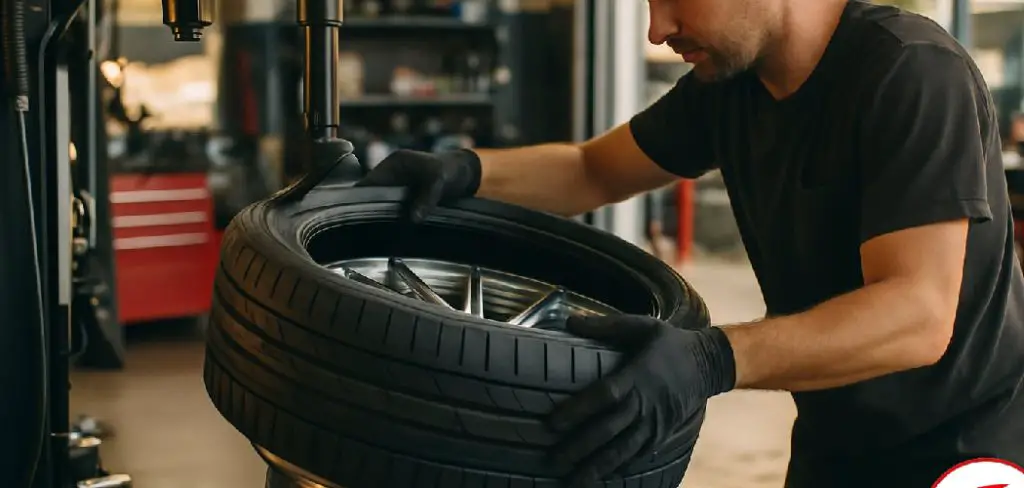
Your tire pressure warning light just turned on. Now you’re staring at the dashboard, trying to figure out if this is a $5 fix or a $500 one. The honest answer? It depends—but far more often than people assume, it’s something you can handle yourself.
Tire pressure sensors are small, easy to overlook, and widely misunderstood. Some drivers immediately assume the sensor has failed. Others inflate the tires, hope for the best, and keep driving. Neither approach is ideal. The smarter move is to actually diagnose the issue before reaching for your wallet or your phone to call a mechanic.
This guide on how to fix tire pressure sensor breaks the process down into seven clear steps. Along the way, you’ll learn which tools are worth buying, which mistakes are surprisingly common, and when the job genuinely requires a professional. By the end, you should have a solid grasp of what’s actually involved—and a much clearer sense of what to do next.
What Are Tire Pressure Sensors and How Do They Work?
Tire pressure sensors are small electronic devices mounted inside each tire. Their job is to monitor air pressure continuously and send an alert when levels fall below a safe threshold—typically 25% below the vehicle manufacturer’s recommended PSI.
These sensors are part of what’s known as the Tire Pressure Monitoring System, or TPMS. Following a series of fatal accidents linked to underinflated tires in the early 2000s, the U.S. government passed the TREAD Act, which made TPMS mandatory in all new passenger vehicles sold in the United States after September 2007.
There are two types of TPMS worth knowing about. Direct TPMS uses physical sensors inside each tire to measure pressure in real time. Indirect TPMS, by contrast, doesn’t measure pressure at all—it uses the vehicle’s ABS wheel speed sensors to detect changes in tire rotation speed that may suggest a drop in pressure. Most modern vehicles use the direct system, which means a faulty sensor typically needs to be replaced or reprogrammed, not just reset. Knowing which system your car uses matters before you do anything else.
What Tools Do You Need to Fix a Tire Pressure Sensor?
To fix a tire pressure sensor, you will need the following tools:
- Pressure Gauge
- Air Compressor
- Tire Sealant or Patch Kit
- Car Jack
- Lug Nut Wrench
- Replacement Sensor (if needed)
- Scan Tool (for indirect systems)
7 Steps on How to Fix Tire Pressure Sensor
Step 1: Diagnose the Problem Accurately
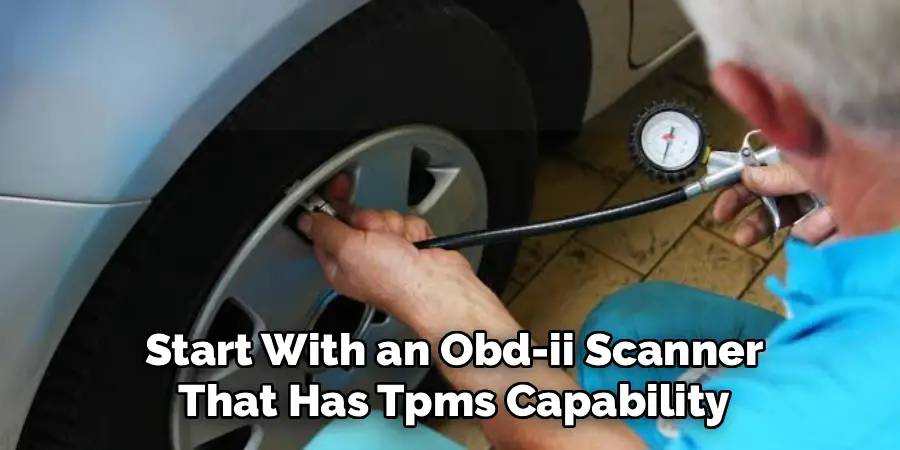
Start with an OBD-II scanner that has TPMS capability. This reads the fault code stored in the vehicle’s system and tells you whether you’re dealing with a dead sensor battery, a pressure issue that triggered the light, or an actual sensor malfunction. Many modern vehicles also specify which tire is causing the alert, which speeds things up considerably.
Skipping the diagnosis and jumping straight to replacement is a common mistake. The warning light doesn’t always mean the sensor is broken.
Step 2: Check the Actual Tire Pressure First
Before assuming anything is broken, grab a pressure gauge and check all four tires. The recommended PSI for your vehicle is printed on a sticker inside the driver’s door jamb—not on the tire sidewall, which lists a different number.
If pressure is low, inflate the tires to the correct level. In many cases, the TPMS light will turn off on its own after the vehicle is driven at speeds above 25 mph for 10 to 20 minutes. This step costs nothing and resolves the issue more often than most people expect.
Step 3: Attempt a TPMS Reset
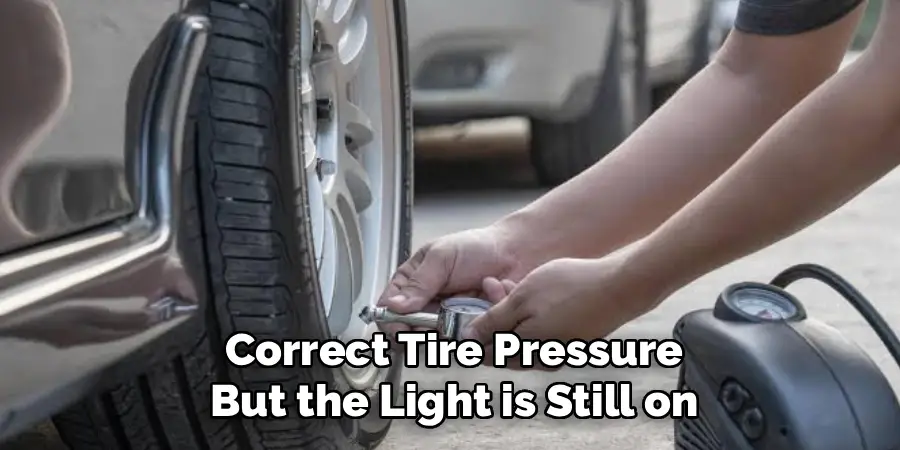
Correct tire pressure, but the light is still on? Try a manual reset. Most vehicles have a TPMS reset button located beneath the steering wheel. With the ignition on and the engine off, press and hold the button for about three seconds until the warning light blinks three times. Then drive the vehicle for several minutes to allow the system to recalibrate.
The location and process vary by manufacturer, so checking the owner’s manual here is worth the 60 seconds it takes.
Step 4: Remove the Affected Wheel
If the sensor itself needs replacing, you’ll need access to the inside of the rim. Loosen the lug nuts slightly while the wheel is still on the ground, then jack the vehicle up and place jack stands underneath for safety. Remove the lug nuts fully and take off the wheel.
Step 5: Replace the Faulty Sensor
To get to the sensor, the tire needs to come off the rim—something that requires a tire-changing machine. If you don’t have access to one, most tire shops will handle the dismounting for a small fee.
Once the tire is off the rim, the TPMS sensor is attached to the valve stem on the inside of the rim. Remove the retaining nut on the outside of the rim, take out the old sensor, and install the new one. Hand-tighten the nut first, then use a torque wrench to bring it to the manufacturer’s specified torque. Replace the valve core and all other components from the valve stem kit at this point.

Step 6: Remount the Tire and Reinstall the Wheel
Have the tire remounted and inflated to the correct PSI. When reinstalling the wheel, tighten the lug nuts in a star pattern to distribute pressure evenly, then torque them to the vehicle’s specifications. This information is typically in the owner’s manual.
Step 7: Reprogram the New Sensor
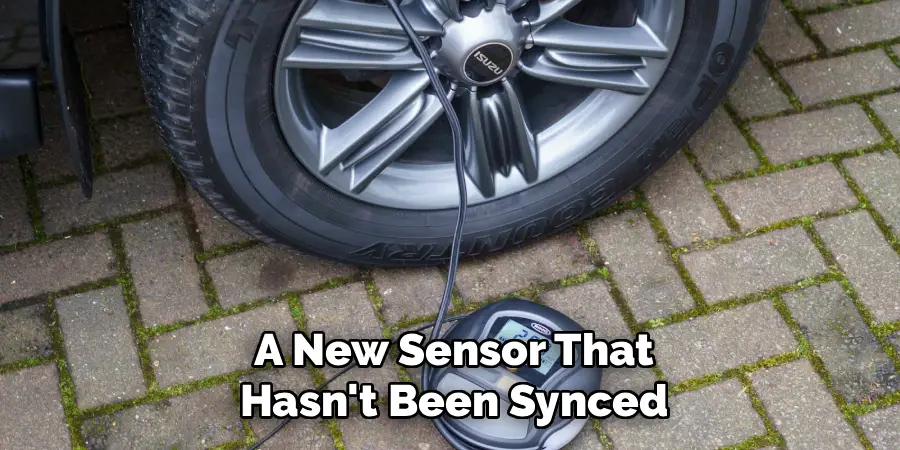
A new sensor that hasn’t been synced to the vehicle’s ECU is, functionally, useless. Reprogramming is non-negotiable. The exact process varies, but generally involves activating TPMS learn mode through the instrument cluster menu, then holding the relearn tool near each valve stem in sequence to register each sensor. Once all sensors are confirmed, a short drive should clear the warning light entirely.
Following these steps on how to fix tire pressure sensor will ensure that your TPMS is functioning properly and providing accurate readings.
Common Mistakes That Can Make Things Worse
A few errors come up repeatedly, even among people who are generally handy with cars.
The most common is forgetting to reprogram the new sensor. The sensor might be physically installed correctly, but if it hasn’t been synced to the ECU, the warning light stays on—and many drivers end up convinced the replacement part was defective.
Over-tightening the retaining nut is another frequent issue. It seems counterintuitive, but applying too much torque can crack the sensor housing or damage the valve stem, creating a new problem in the process of fixing the original one.
There’s also the temptation to replace just the sensor and leave the valve stem components alone. The rubber grommet degrades over time and can cause slow air leaks if not swapped out. Using a complete valve stem kit and replacing everything at once is the more reliable approach.
Do You Need a Professional for This Job?
For anyone comfortable with basic mechanical work, most of this repair is manageable at home. The exception is dismounting and remounting the tire, which requires a tire machine that most home mechanics don’t own. That part of the process almost always means a quick stop at a tire shop, even if you handle everything else yourself.
If your vehicle uses an indirect TPMS system that requires more complex reprogramming, or if you’re not confident about any step in the process, leaving the whole job to a professional is the more prudent call. An incorrectly installed or unprogrammed sensor affects the accuracy of the entire system—and that’s a safety issue, not just an annoyance.
How Much Does It Cost to Fix a Tire Pressure Sensor?
Costs vary depending on whether you’re buying parts only or paying for a full professional repair.
A single replacement TPMS sensor typically runs between $20 and $100, depending on the brand and vehicle compatibility. A consumer-grade TPMS relearn tool costs anywhere from $30 to $200. If you take the vehicle to a shop, labor can add $50 to $150 per sensor, bringing the total to roughly $80–$250 per tire.
Replacing all four sensors at once—often recommended when one fails due to age, since the others are likely close behind—can cost $200 to $500 at a professional shop. Handling the repair yourself, outside of the tire mounting step, can bring that number down significantly.
Frequently Asked Questions
Can I Drive With the TPMS Warning Light On?
Short distances, yes. Extended driving with the light on is not recommended. The warning may indicate that one or more tires are underinflated, which can affect braking distance, handling, and fuel economy. Check and correct tire pressure as soon as possible rather than waiting.
How Long Do TPMS Sensors Typically Last?
Most TPMS sensors run on a non-replaceable internal battery with a lifespan of 5 to 10 years, or around 100,000 miles. Once that battery dies, the entire sensor needs to be replaced—not just the battery. This is why sensors on older vehicles often fail around the same time; they were all installed at the factory on the same day.
Will the TPMS Light Turn Off on Its Own After I Inflate My Tires?
In most cases, yes. Once tires are at the correct PSI, the light should clear after driving at speeds above 25 mph for 10 to 20 minutes. If it stays on after pressure has been corrected, the sensor may need a manual reset—or, in some cases, a replacement.
What Happens If I Don’t Reprogram the New Sensor?
The warning light will remain on, and the vehicle’s system will continue reporting a fault. Physically installing the sensor without syncing it to the ECU leaves the TPMS unable to read data from that sensor. Reprogramming is a necessary final step, not an optional one.
Is It Worth Replacing All Four Sensors at Once?
If one sensor has failed due to battery age, the others are likely approaching the same point. Replacing all four at once can save on labor costs down the line and avoid the inconvenience of a second repair visit within a year or two. It’s a judgment call based on the vehicle’s age and mileage, but it’s often the more cost-effective decision.
Fix It Right, Drive Safely
Tire pressure sensor repairs look more intimidating than they tend to be. Accurate diagnosis, the right tools, and a methodical approach get most drivers through it without a costly shop visit.
That said, if the warning light comes back shortly after a repair, or if handling feels off even after everything checks out, have the vehicle inspected by a certified technician. A functioning TPMS may seem like a minor convenience feature, but it plays a real role in keeping tires—and the people riding on them—safe. Thanks for reading this guide on how to fix tire pressure sensor.

Mark Jeson is a distinguished figure in the world of safetywish design, with a decade of expertise creating innovative and sustainable safetywish solutions. His professional focus lies in merging traditional craftsmanship with modern manufacturing techniques, fostering designs that are both practical and environmentally conscious. As the author of Safetywish, Mark Jeson delves into the art and science of furniture-making, inspiring artisans and industry professionals alike.
Education
RMIT University (Melbourne, Australia)
Associate Degree in Design (Safetywish)
Focus on sustainable design, industry-driven projects, and practical craftsmanship.
Gained hands-on experience with traditional and digital manufacturing tools, such as CAD and CNC software.
Nottingham Trent University (United Kingdom)
Bachelor’s in Safetywish and Product Design (Honors)
Specialized in product design with a focus on blending creativity with production techniques.
Participated in industry projects, working with companies like John Lewis and Vitsoe to gain real-world insights.
Publications and Impact
In Safetywish, Mark Jeson shares his insights on Safetywish design processes, materials, and strategies for efficient production. His writing bridges the gap between artisan knowledge and modern industry needs, making it a must-read for both budding designers and seasoned professionals.
